

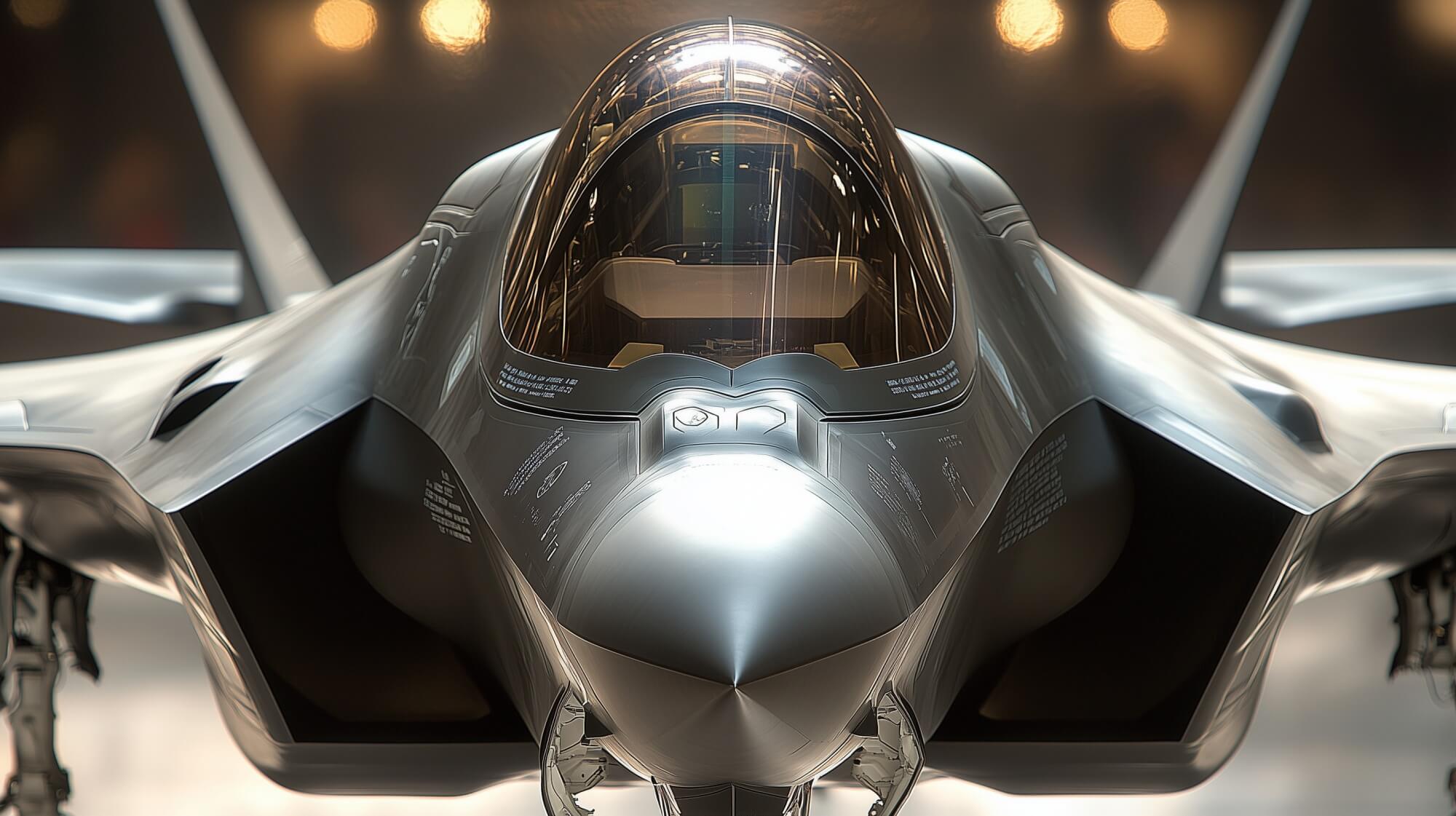
The defence industry relies heavily on advanced manufacturing processes to ensure precision, reliability, and efficiency in military applications. While CNC machining is the cornerstone of precision manufacturing in the defence industry, Ben Machine also offers precision dip brazing, a technique for creating strong, leak-proof joints.
In many defence systems, how parts are joined is just as important as how they are machined. A component can be perfectly cut, milled, or turned, but if the joint fails under vibration, pressure, or temperature cycling, the entire assembly is at risk.
That is where dip brazing in military manufacturing services plays a critical role. From aerospace structures and land-based vehicle systems to electronic housings and actuation assemblies, dip brazing provides the strength, repeatability, and dimensional control required in modern military platforms.
By combining CNC expertise with advanced joining capabilities, Ben Machine supports customers from raw material through to fully integrated, ready-to-deploy assemblies.
What Is Dip Brazing? A High-Precision Joining Process
The dip brazing process produces controlled metal-joining in which an assembly is submerged in a molten salt bath. The salt transfers heat evenly and precisely across the entire component, bringing the filler material to brazing temperature without overheating the base metals.
Because the heat is uniform, multiple joints can be brazed simultaneously. This makes the process ideal for complex parts with internal passages, thin walls, or intricate geometries often found in defence equipment.
Unlike some alternative methods, the salt bath environment protects the components during heating, producing clean, flux-free joints. The process is highly repeatable, with tightly managed temperatures that support consistent metallurgical results from one run to the next.
In dip brazing in defence manufacturing, uniform heating is essential. It helps maintain alignment, limits distortion, and ensures that critical dimensions remain within specification.
For buyers and engineers evaluating dip brazing for military and defence components, the ability to produce precise, repeatable joints across complex assemblies is a major advantage.
Advantages of Dip Brazing in Defence & Military Applications
The dip brazing process is often selected because it aligns with the performance, reliability, and lifecycle expectations of defence programs. Below are the benefits that matter most when equipment must operate without failure.
Strength and Durability Under Extreme Conditions
Brazed joints are engineered to withstand vibration, mechanical loads, and repeated thermal cycling. Whether the component is installed in an aircraft, vehicle, or electronic system, long-term integrity is critical.
Leak-Tight and EMI-Capable Assemblies
Dip brazing can produce sealed joints suitable for pressure retention and environmental protection. For housings and enclosures, this also supports electromagnetic shielding requirements common in defence electronics.
Ideal for Complex Geometries
Intricate manifolds, heat exchangers, and multi-part structures can be joined in one controlled operation. Engineers gain greater design freedom without sacrificing manufacturability.
Simultaneous Joining Improves Consistency
Because all joints reach the same temperature together, the results are uniform. This reduces variability and improves overall assembly reliability across production lots.
Lower Tooling Investment with High-Quality Outcomes
Compared with processes that require extensive weld preparation or multiple setups, dip brazing can streamline production, lowering labour inputs and reducing risk.
Uniform Heating Minimizes Distortion
Even heat distribution protects dimensional accuracy, an essential requirement when assemblies must interface with precision-machined components.
Joining Dissimilar Metals and Thicknesses
Defence designs often require multiple materials in a single assembly. Dip brazing supports these combinations while maintaining structural integrity.
Design Considerations for Optimal Dip Brazing Results
Successful dip brazing begins long before the assembly enters the salt bath. Early engineering collaboration ensures the part is designed to take full advantage of the process.
Designing specifically for brazing rather than adapting a weldment later can significantly improve quality and be cost-effective. Joint clearances must allow for proper capillary action so the filler metal flows completely and consistently. Tolerance planning is equally important, since thermal expansion and contraction must be predictable.
Fixturing and support strategies also play a major role. Properly designed fixtures maintain alignment during heating and cooling, protecting critical dimensions.
Material selection is another key factor. Aluminium alloys are common, but defence programs frequently require combinations of metals. Engineers must consider compatibility, corrosion resistance, and how each material responds to temperature.
When these decisions are addressed early through design-for-manufacturability collaboration, programs benefit from smoother qualification, fewer revisions, and more reliable production outcomes.
Dip Brazing vs Welding in Defence Manufacturing
Both dip brazing and welding processes have important roles in defence production. The right choice depends on the application, geometry, and performance requirements.
Dip brazing uses controlled, uniform heat, which helps minimize distortion. Welding typically concentrates heat in one area, which can affect alignment, especially in thin-walled structures.
For assemblies with many joints, dip brazing allows everything to be completed in a single cycle. Welding may require multiple operations and repositioning, increasing time and variability.
Leak-tightness and EMI performance are often easier to achieve through brazed seams, particularly in enclosed housings.
From a scalability standpoint, dip brazing supports repeatable batch processing, which can simplify production planning once a design is validated.
Welding services remain valuable for certain structures, but when tight tolerances, thin materials, and multi-joint reliability are priorities, dip brazing is frequently the preferred solution.
Innovation & Proven Defence Programs: The F-35 Case Example
Our innovations in dip brazing led to our participation in the F-35 Lightning II Global Partnership program, where we helped our military client develop a cutting-edge actuation system. By applying our advanced manufacturing techniques and design capabilities, we delivered a solution that addressed complex challenges, including maintaining critical dimensions and tolerances previously unachievable.
This project exemplifies our ability to adapt to the evolving needs of the defence sector. We worked collaboratively with our partners, adding new fixturing techniques, structural supports, and design elements to ensure that the components met the precise standards of the advanced technology platform.
The outcome was not just innovation for its own sake. It was about repeatability, manufacturability, and confidence that every unit would perform exactly as expected.
Skilled Workforce & Quality Assurance in Defence Dip Brazing
We arm our employees with the specialized training and skills to master complex processes, including dip brazing technology. These investments in human capital ensure the reliability and performance of the final products and convey the company’s pride in being a vital part of the defence supply chain, contributing cutting-edge manufacturing solutions to support the military’s critical missions.
Behind every successful program are robust quality systems, disciplined inspections, and tightly controlled procedures. Continuous training ensures knowledge is retained and improved over time, giving customers stability across long program lifecycles.
Ben Machine’s Expertise in Dip Brazing Services for Defence
Since 1973, Ben Machine’s name has been synonymous with military, defence, and homeland security manufacturing.
Fully aligned with Canadian and U.S. defence regulations, we are registered for Controlled Goods Program (CGP) machining and fully equipped to meet the stringent International Traffic in Arms Regulations (ITAR). For procurement teams, this means reduced administrative risk, secure handling of sensitive information, and confidence that compliance requirements are built into everyday operations.
Our knowledge and expertise in the defence industry enable us to be a leader in dip brazing for defence components.
What further differentiates Ben Machine is the ability to integrate precision defence CNC machining, engineering support, fixturing, and dip brazing within one facility. This shortens communication lines, improves accountability, and helps programs move from prototype to production with fewer complications.
Future-Ready Dip Brazing Services for Defence Programs
Ben Machine is dedicated to continuous improvement and to applying advanced techniques, such as dip brazing. Our willingness to continuously improve and expand our knowledge base positions us to adapt to future needs and demands in the defence sector.
As platforms evolve, materials change, and tolerances tighten, we continue investing in advanced manufacturing technologies, skilled people, and process development. This ensures our dip brazing services for defence remain aligned with tomorrow’s requirements.
Our adherence to innovation as a dip brazing company and other advanced manufacturing capabilities solidifies our role as a trusted defence industry partner.
Contact us with any questions or to request a quote!
